
Land Analytics
Dynamic Lands Labs’ geospatial and spatiotemporal analysis tools and algorithms, built on a custom codebase, enable in-depth study of LiDAR, multispectral satellite imagery, and other GIS datasets to extract meaningful, site-specific insights.
DLL delivers insights through interactive visualization platforms, allowing clients to upload, explore, and filter their processed data in an intuitive web environment.
For design professionals, DLL also has a suite of custom Grasshopper tools for Rhino, enabling seamless integration of analytical outputs directly into 3D design workflows—ideal for architects, landscape architects, and students seeking to connect environmental data with design intent.
Spectroscopy with Multispectral Satellite Imagery
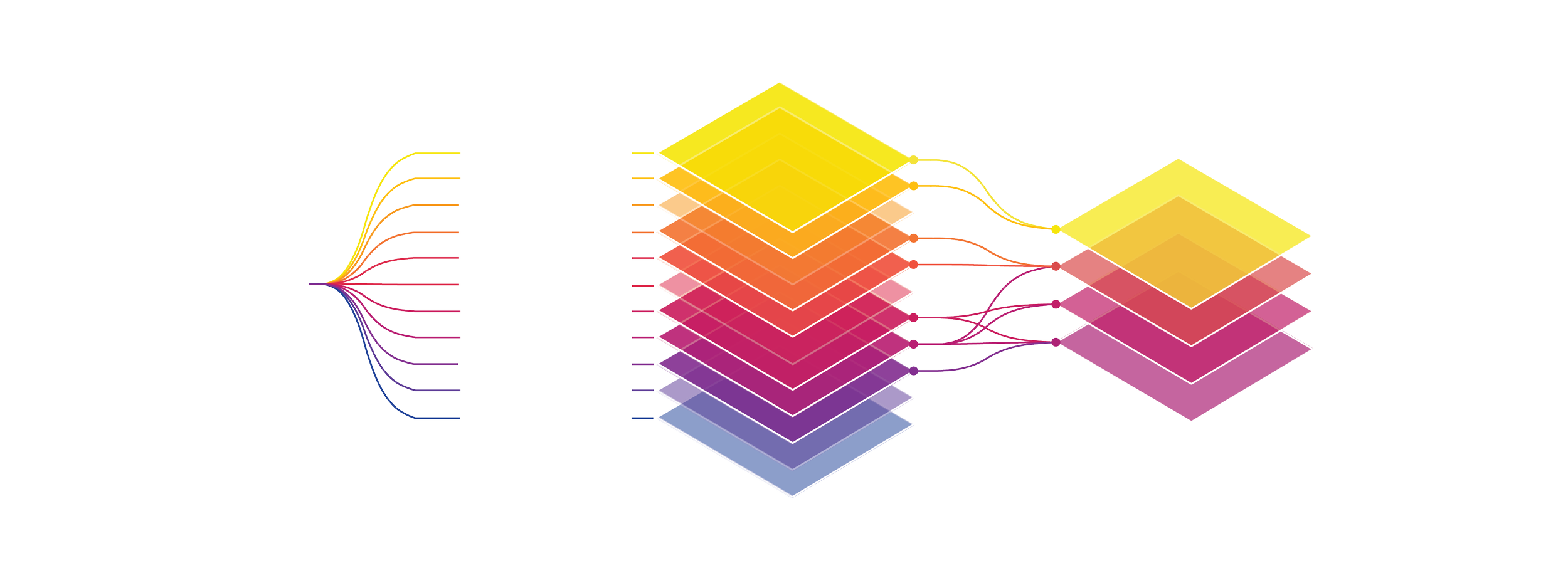
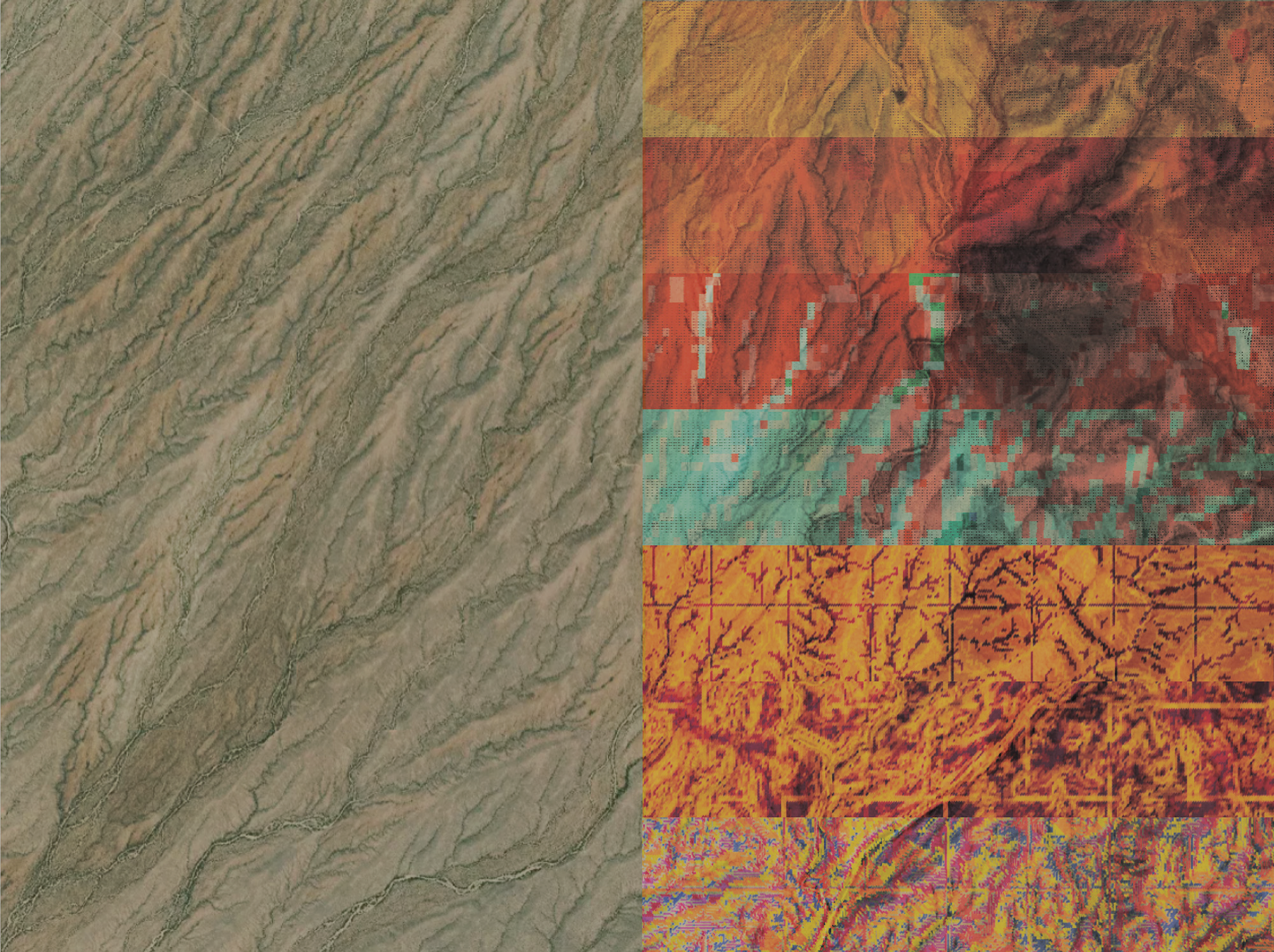
Multispectral satellite imagery captures reflected energy across a range of wavelengths, and each band highlights different physical properties of the landscape. By combining these bands in specific ways, we can derive powerful spectral indices that reveal surface temperature patterns, vegetation health (NDVI), moisture content (NDMI), and even distinguish between different material types. These composite measurements allow us to translate raw pixel data into meaningful insights about site conditions, environmental performance, and surface characteristics.
Spatiotemporal Spectral Insights


Vegetation (NDVI)
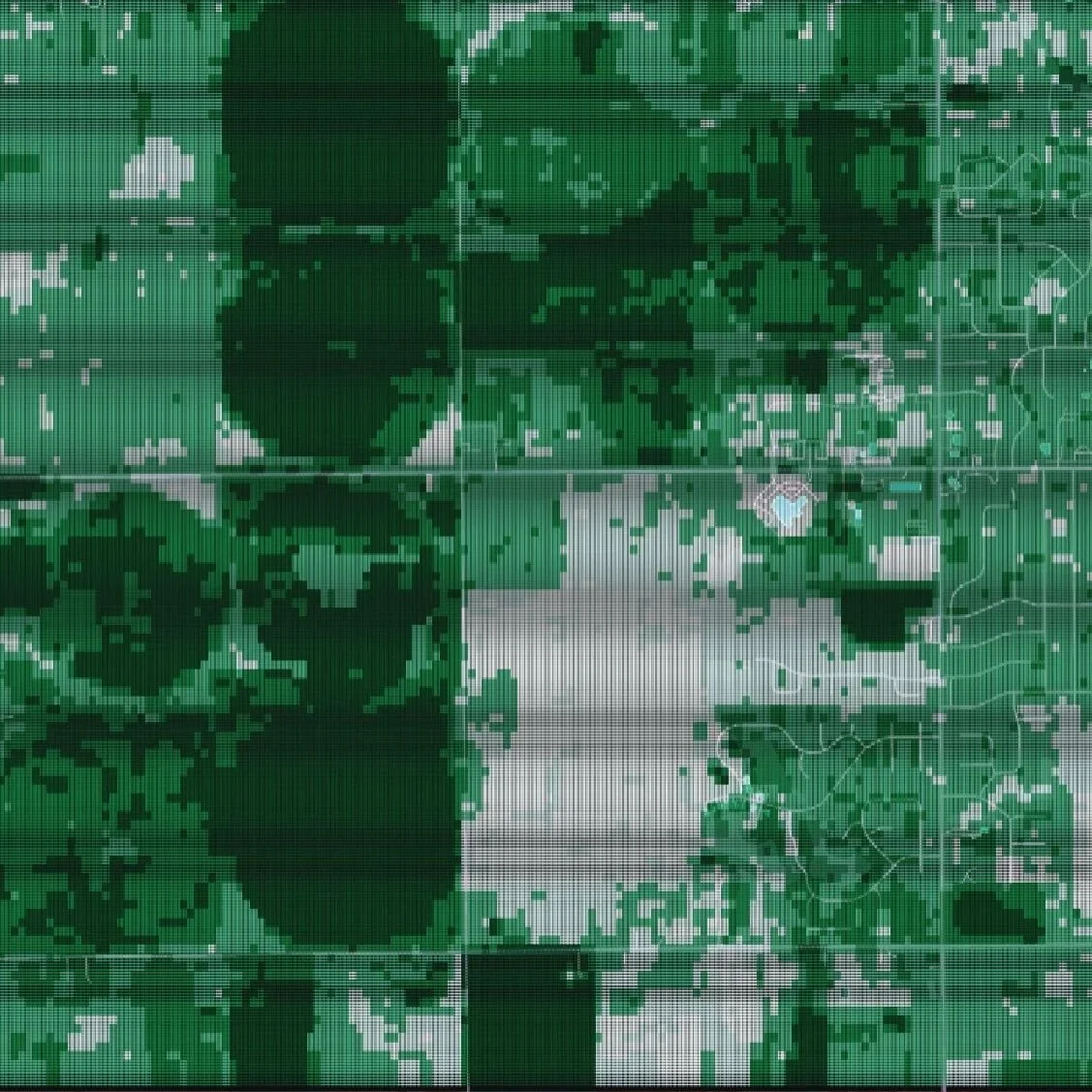
NDVI (Normalized Difference Vegetation Index), measures how much infrared light is reflected by chlorophyll. This measurement allows us to measure spatial and temporal patterns of vegetation health and density.

Moisture (NDMI)
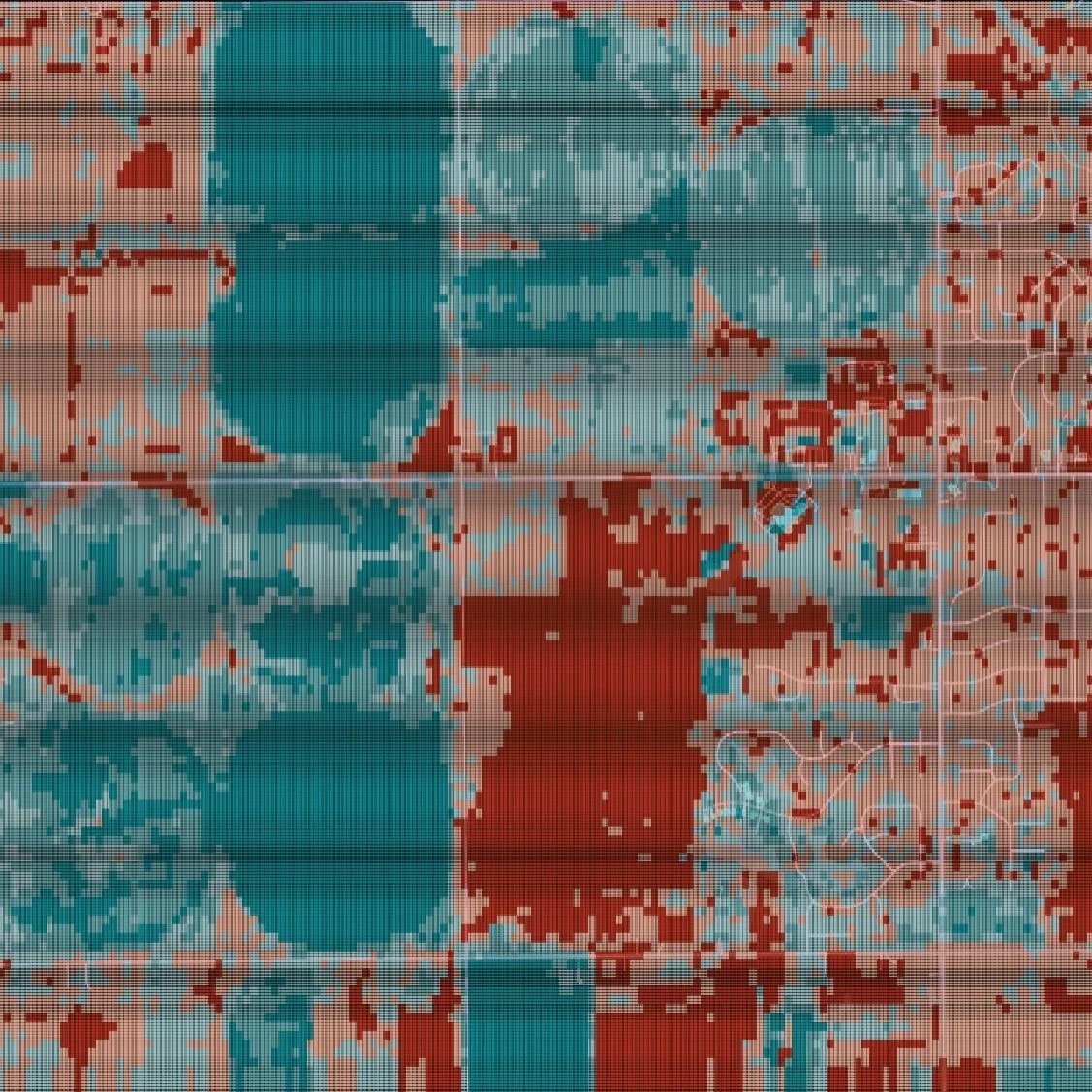
NDMI (Normalized Difference Moisture Index) measures the relative moisture content of vegetation by comparing near-infrared and shortwave infrared reflectance. This measurement allows us to assess spatial and temporal patterns of vegetation water stress, canopy moisture, and drought response across a landscape.

Land Surface Temperature
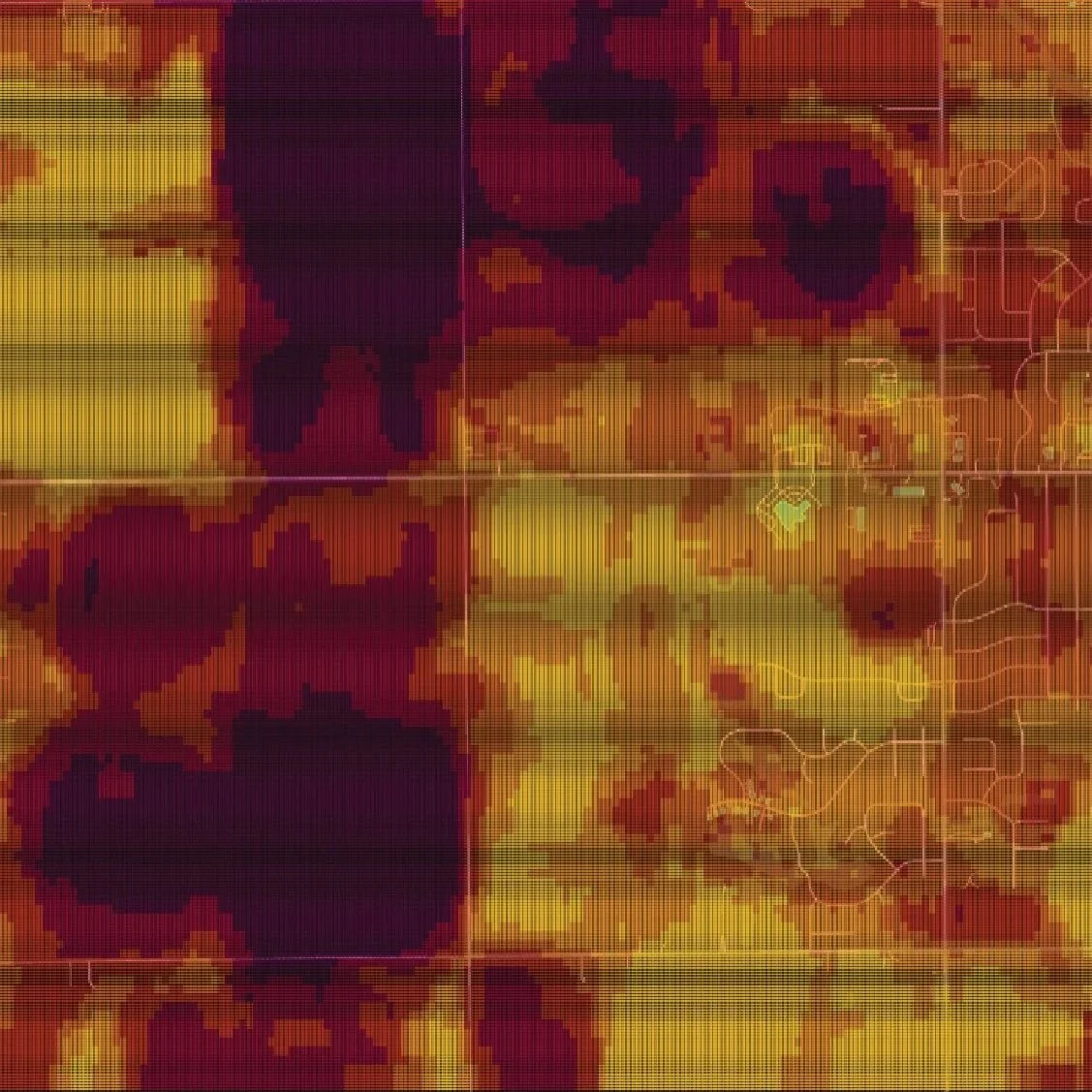
Land Surface Temperature (°F), derived from the thermal bands of Landsat 8/9 multispectral imagery, is analyzed to reveal both spatial and temporal temperature patterns. Changes are measured year over year at the pixel level to pinpoint areas where a site has warmed or cooled and the correlation between NDVI, NDMI and terrain signals.
Multispec + LiDAR
Terrain Insights
Terrain Signals

3D Elevation & Slope
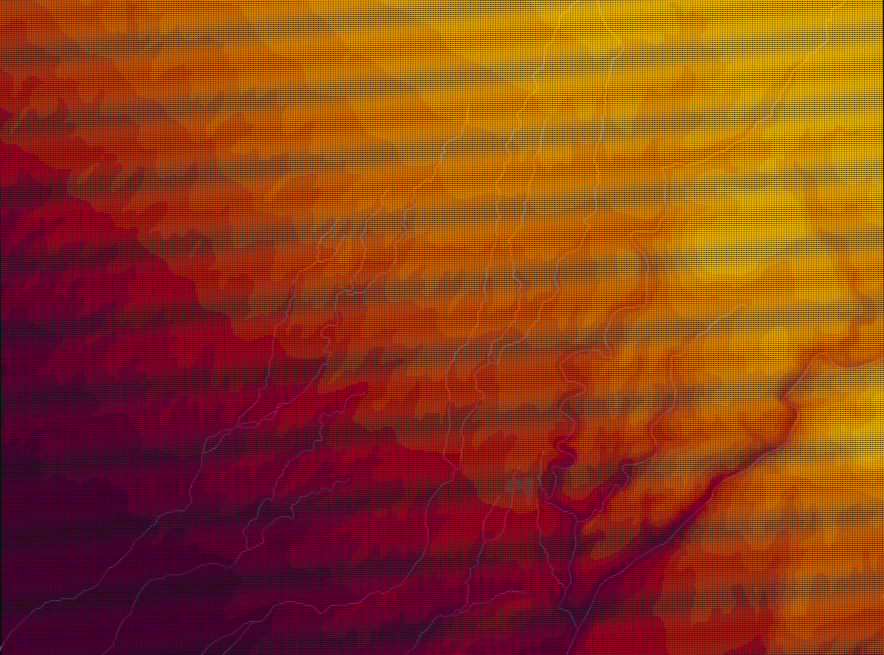
Terrain characteristics are analyzed using local directional slope signals derived from USGS 3DEP data. At each location, elevation differences are evaluated across the surrounding neighborhood to capture how terrain changes in multiple directions rather than along a single slope axis.
Anisotropy
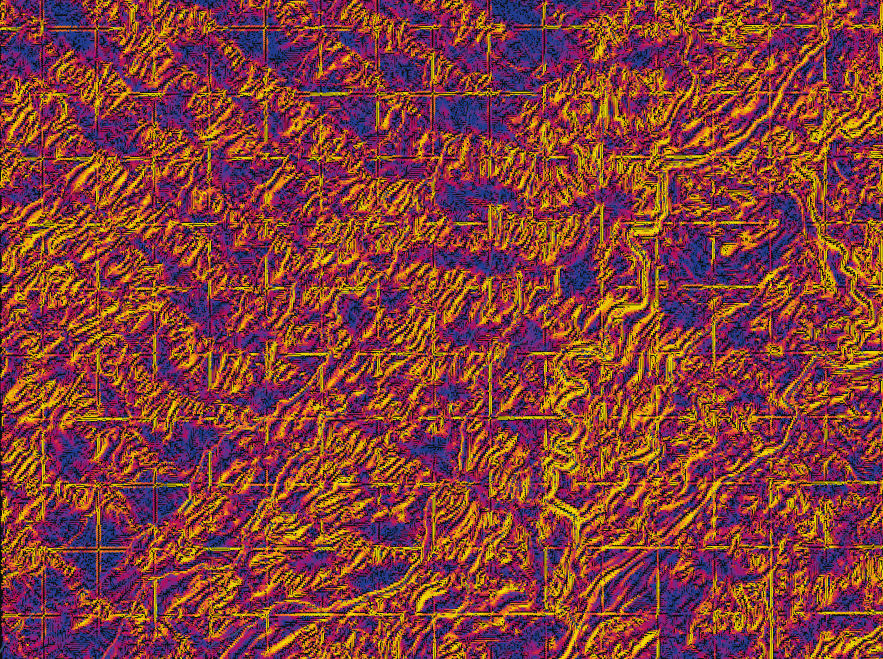
Directional anisotropy is calculated to describe how organized or diffuse local relief is—distinguishing planar slopes, ridgelines, channels, and isotropic features such as knolls or depressions. This measure reveals whether terrain structure is directionally focused or evenly distributed.
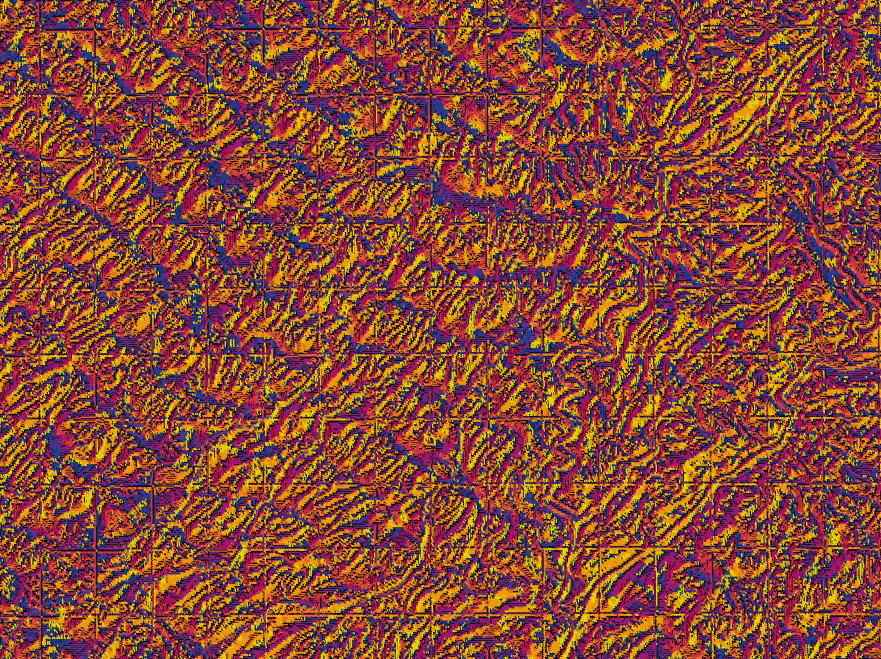
Signal Direction
The dominant slope change direction and angle are extracted from the directional signal to identify the primary orientation of downhill movement, providing insight into flow paths, aspect-driven processes, and terrain-controlled transport.
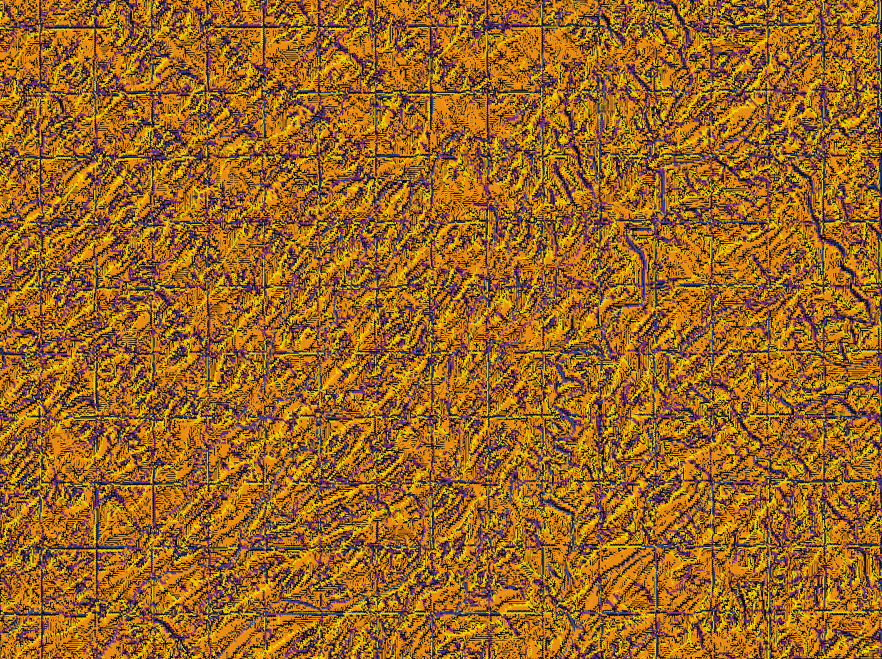
Downhill Fraction
Uphill and downhill fractions quantify how many surrounding directions contribute to descent or ascent, helping to differentiate dispersive surfaces such as ridges from focused flow features such as channels and slope breaks.
Together, these terrain metrics are integrated into a composite, point-based terrain model that describes not just slope, but how terrain organizes, concentrates, and disperses energy and material across a site. The resulting datasets are available for spatial visualization, temporal comparison, and integration with vegetation, temperature, and hydrologic analyses.
Infrastructure




Power
Structures
Construction
Hospitals
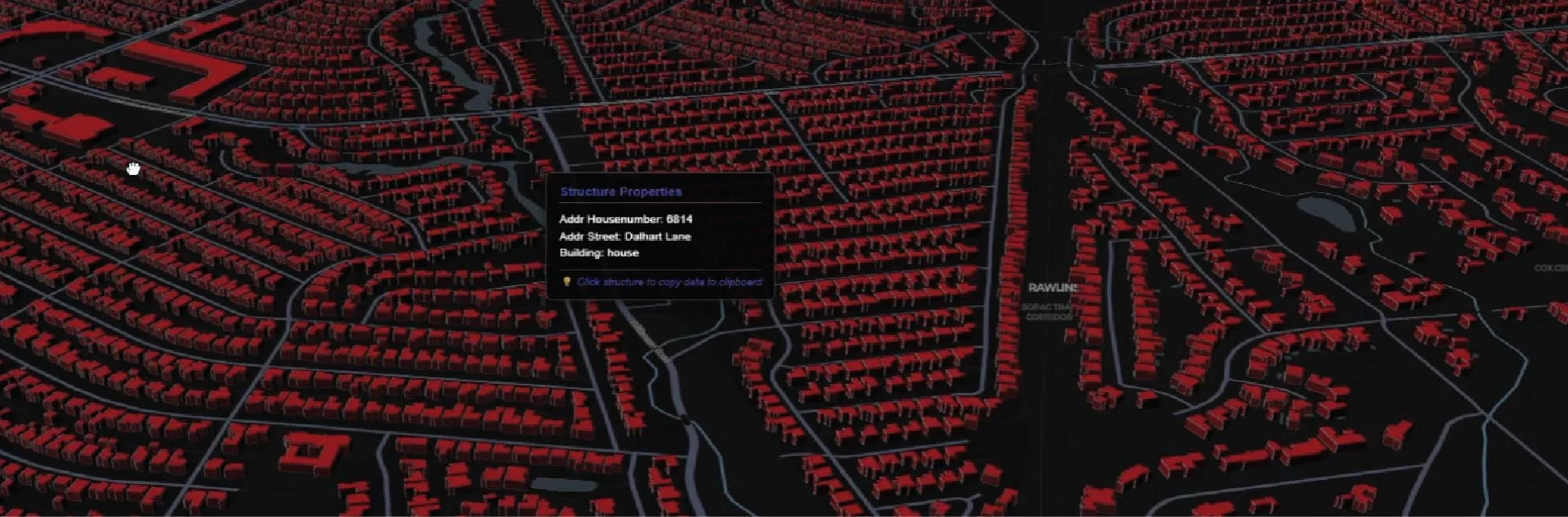
Dynamic Lands Lab integrates open-source GIS data to map and analyze surrounding context for any site. Our platform compiles information on existing structures, active construction sites, hospitals, and other critical facilities to quantify proximity and relationships within the built environment. We measure distances to nearby assets and generate aggregated summaries that reveal what surrounds your location. Estimated building footprints and massing models are provided in both GeoJSON and OBJ formats, enabling clients to interactively explore surrounding infrastructure through the web app or seamlessly integrate it into 3D design environments.
Extreme Weather Events



High Winds
Tornados
Hail
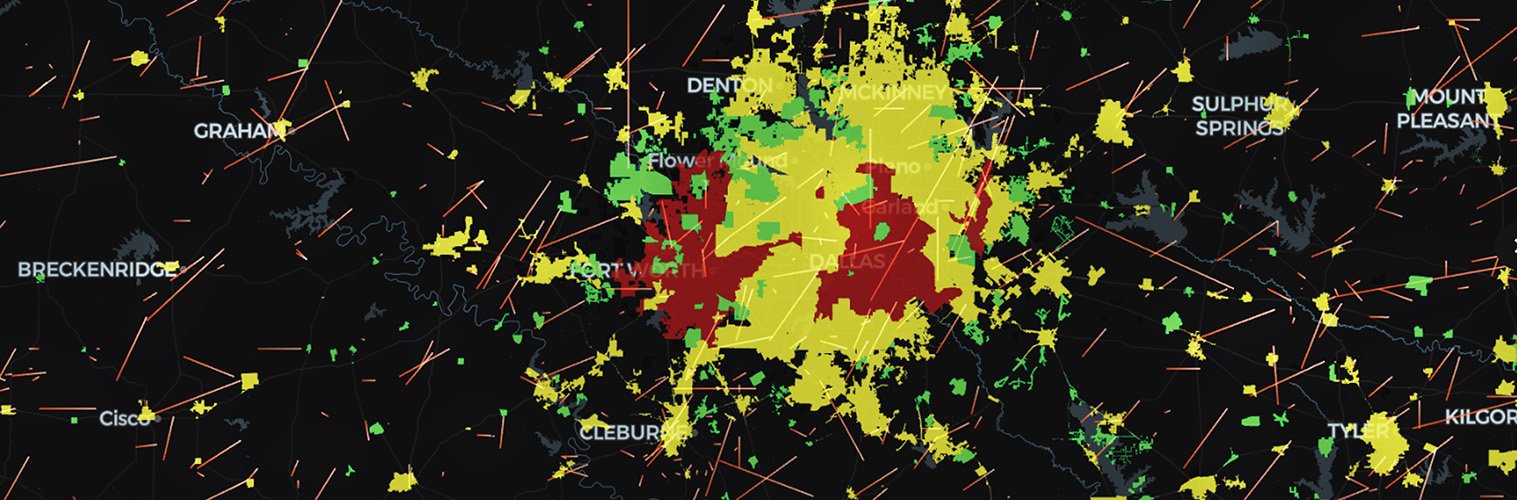
Dynamic Lands Lab analyzes historical patterns of extreme weather events including tornadoes, high winds, and hail to help clients understand environmental risk over time. Using spatial and temporal aggregation, we quantify the frequency, intensity, and proximity of severe weather occurrences affecting your site and its surrounding region. These insights reveal long-term exposure trends, enabling more informed decisions related to resilience planning, design mitigation, and operational risk management.